


Table of Contents
- How to Spot Quality Streetwear: Start With Fabric
- How to Check Garment Construction for Durability
- Evaluating Hardware and Zippers
- Heavyweight Cotton Streetwear: Why Weight Matters
- Assessing Print and Graphic Application Durability
- Finding Unique Graphic Design Clothing Stores Worth Your Money
- Red Flags: What to Avoid When Shopping for Quality Streetwear
- Resale Value and Counterfeit Detection
- Frequently Asked Questions
Last Updated: October 9, 2026
How to Spot Quality Streetwear: Start With Fabric
When you're shopping to spot quality streetwear, the first thing to check is the fabric itself. This is where the difference between a piece that lasts and one that falls apart becomes obvious. At Hippy Mood Merch, we focus heavily on fabric quality because it's the foundation of everything else.
Understanding what makes fabric quality starts with knowing what to feel for and what to measure. Most shoppers touch a garment once and move on. That's a mistake. Spend time with the fabric. Rub it between your fingers. Hold it up to light. Stretch it gently. These simple tests tell you more than any tag ever will.
Understanding GSM and Fabric Weight
GSM (Grams per Square Meter) is the standard measurement for fabric weight. Higher GSM means thicker, denser fabric. This directly affects durability and longevity.
For streetwear, here's what the numbers mean:
- Lightweight: Under 150 GSM (thin, breathable, prone to wear)
- Midweight: 150-250 GSM (balanced comfort and durability)
- Heavyweight: 250+ GSM (thick, durable, long-lasting)
Our Heavyweight Sweatpants feature 10 oz./yd² (339 g/m²) fabric weight. That's solidly in the heavyweight category. This density means the fabric resists pilling, fading, and general breakdown from regular wear.

When you're evaluating a piece, check the tag for GSM or ounce weight. If the brand doesn't list it, that's a red flag. Quality manufacturers are proud of their fabric weight because it directly correlates to how long the piece will last. Lightweight fabric might feel soft initially, but it breaks down quickly.
Natural Fibers vs. Synthetic Blends
The fiber content matters as much as the weight. Natural fibers like cotton breathe better and feel softer against skin. Synthetic fibers like polyester add durability and reduce shrinkage.
100% cotton pros and cons:
- Breathable and soft
- Prone to shrinkage
- Can pill with heavy wear
- Fades over time
Cotton-polyester blends (like our 80/20 hoodies) pros and cons:
- Reduced shrinkage
- Better color retention
- More durable than pure cotton
- Slightly less breathable
Look at the tag. Quality streetwear typically uses either 100% cotton or a blend favoring cotton (at least 60% or higher). Cheap pieces often flip this ratio, using mostly synthetic with a touch of cotton for feel.
Testing Opacity, Drape, and Hand-Feel
Hold the garment up to light. Cheap fabric shows your hand right through it. Quality fabric has density that blocks light. This opacity test takes five seconds and reveals construction quality instantly.
Drape is how the fabric hangs on your body. Hold the piece away from your body and let it fall naturally. Does it cling awkwardly? Does it billow out? Quality fabric drapes smoothly without clinging or puffing.
Hand-feel is the texture. Run your fingers over the surface. Quality fabric feels smooth and even. Cheap fabric feels rough, thin, or inconsistent. If you feel bumps, loose fibers, or uneven texture, the construction quality is poor.
How to Check Garment Construction for Durability
Once you've confirmed the fabric is solid, look at how it's assembled. Construction quality determines whether your piece survives five washes or fifty. This is where most cheap streetwear fails.
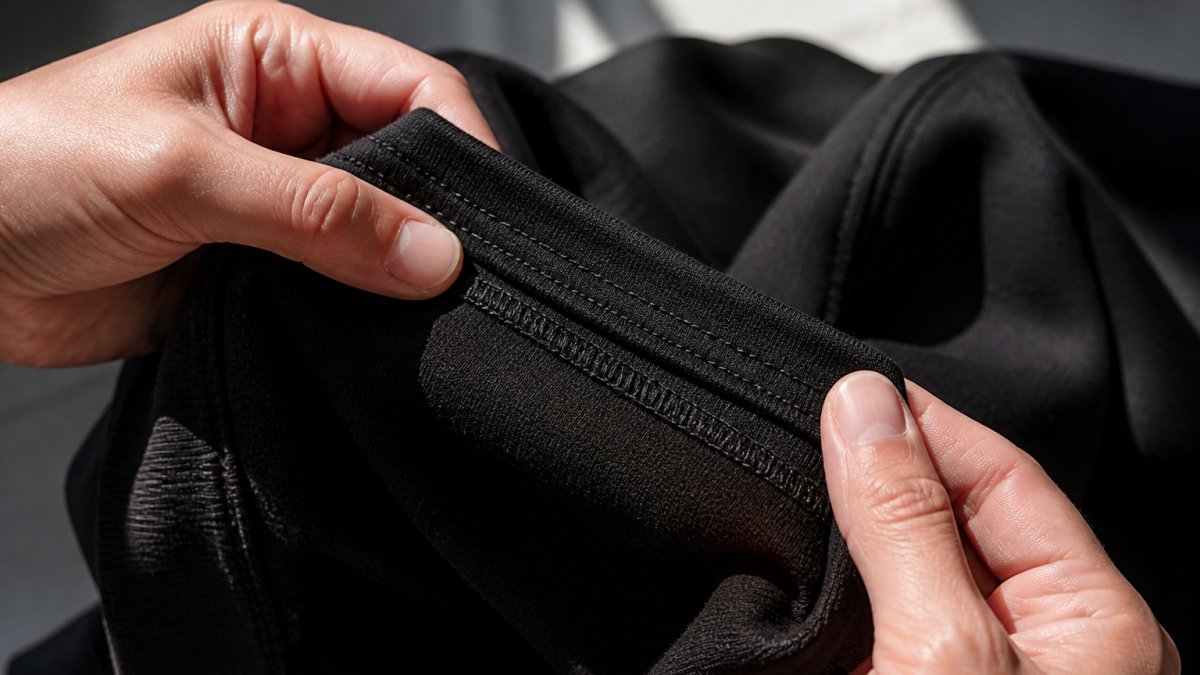
Seam Allowance and Double-Needle Stitching
Seam allowance is the space between the edge of the fabric and the actual stitch line. Quality garments use wider seam allowances (typically ½ inch or more).
Double-needle stitching is two parallel lines of thread instead of one. This strengthens seams dramatically. It's the difference between a seam that holds for years and one that splits after a few washes.
Check the inside of the garment. Look at the seams on the shoulders, sides, and sleeves. You should see two distinct lines of stitching running parallel.
Run your finger along the seam. It should feel smooth and tight. Loose, uneven stitching indicates poor quality control.
Overlock Seams and Finishing Details
Overlock seams are finished edges that prevent fraying. When you look at the inside of a quality garment, the raw fabric edges are sealed with a tight stitch pattern. This keeps the piece from unraveling in the wash.
Cheap pieces often skip this step entirely. The raw edges fray and separate, which weakens seams and makes the garment look worn quickly.
Check the inside of sleeves, necklines, and hems. Quality finishing looks neat and controlled. Poor finishing looks rough and incomplete. This detail separates streetwear that survives years of wear from pieces that deteriorate after a season.
Evaluating Hardware and Zippers
Hardware includes zippers, buttons, snaps, and drawcord stoppers. These small components fail constantly on cheap garments.
Look for YKK zippers specifically. This is the industry standard for quality. YKK zippers slide smoothly, don't jam, and last through hundreds of open-close cycles.
Test the zipper yourself. Slide it slowly up and down several times. It should move smoothly without resistance.
Check buttons and snaps. They should feel solid and attached securely. Wiggle them gently. If they move or feel loose, they'll fall off with regular wear.
Drawcord stoppers (the plastic pieces that keep drawstrings from pulling through) should feel sturdy. Cheap ones are thin plastic that cracks.
Heavyweight Cotton Streetwear: Why Weight Matters
Heavyweight cotton is the gold standard for streetwear that lasts. We prioritize this in pieces like our Heavyweight Sweatpants because the weight directly impacts longevity and comfort.
Heavyweight fabric (250+ GSM) resists pilling, maintains shape through washing, and feels premium. It's thicker, which means more fibers per square inch. More fibers mean more durability.
The trade-off is minimal. Yes, heavyweight fabric costs more to produce. But it lasts longer, looks better after washing, and maintains its appearance for years.
Compare a lightweight tee to a heavyweight one side by side. The difference is obvious. The heavyweight piece feels substantial. It drapes better. It resists wrinkles.
Assessing Print and Graphic Application Durability
Graphics are what make streetwear distinctive. But cheap graphics crack, fade, and peel. Quality graphics survive washing and wearing without degradation.
Screen Print vs. DTG and Embroidery Quality
Screen printing uses thick ink applied directly to fabric. Quality screen prints feel slightly raised and textured. The ink bonds tightly to the fibers.
COOKIES & CREAM OVERSIZED HOODIE — SIGNATURE PEACE LOGO →
DTG (Direct-to-Garment) printing applies ink directly using inkjet technology. Quality DTG looks vibrant and detailed. The ink penetrates the fabric rather than sitting on top.
Embroidery uses thread stitched into the fabric. Quality embroidery is tight and even. The thread color matches the design. Poor embroidery is loose, uneven, and uses mismatched thread colors.
Test the graphic by stretching the fabric gently. Quality prints stretch with the fabric without cracking. Poor prints crack and peel immediately. Rub the graphic with your finger.
Streetwear-Specific Graphic Durability Markers
Streetwear graphics take abuse. They're stretched, washed frequently, and worn in varied conditions. Quality graphic application accounts for this.
Look for full-coverage backing on embroidered pieces. This stabilizes the stitching and prevents the design from puckering. Check the back of the garment.
For screen prints, check the ink thickness. Rub your finger over the graphic. Quality prints feel slightly raised.
Check for color saturation. Quality prints use vibrant, consistent color throughout the design. Poor prints look dull or have uneven color.
Our pieces prioritize graphic durability because the design is part of the streetwear identity. A fading or peeling graphic defeats the purpose of wearing it.
Finding Unique Graphic Design Clothing Stores Worth Your Money
Not all streetwear retailers prioritize quality equally. When you're shopping, focus on brands that invest in the details we've covered.
Look for retailers that:
- List fabric weight and fiber content clearly
- Show construction details in product photos (seams, stitching, hardware)
- Use quality hardware like YKK zippers
- Explain their printing methods and durability testing
- Have transparent return policies if quality fails
- Have been in business long enough to have reputation
Hippy Mood Merch checks all these boxes. We've been trusted since 2018 because we focus on the fundamentals. Our pieces use heavyweight fabric, double-needle stitching, quality hardware, and durable graphic application. We list fabric weight on every product. We explain our construction methods. We stand behind our pieces.
When you're evaluating any retailer, ask yourself: Do they explain their choices? Do they show you the details? Do they stand behind their products? These are the signs of a brand that prioritizes quality over quick sales.
Red Flags: What to Avoid When Shopping for Quality Streetwear
Certain signs indicate poor quality immediately. Learn to spot them before you buy.
Missing fabric information: If the tag doesn't list GSM or weight, skip it.
Thin, flimsy fabric: Hold it up to light.
Single-needle stitching: Look at the seams. One thin line means poor durability. Pass.
Rough, unfinished edges: Check the inside. Frayed, unfinished edges fray further with washing. Avoid it.
Cheap zippers: Test them. If they stick or feel rough, they'll fail.
Dull, flat graphics: Rub the design.
No return policy: If a retailer won't stand behind their products, they know the quality is poor.
Suspiciously cheap pricing: Quality costs money.
Resale Value and Counterfeit Detection
Quality streetwear holds resale value. Pieces made with quality fabric, construction, and graphics maintain their appeal and price. Cheap pieces become worthless quickly.

When evaluating resale potential, check:
- Fabric quality (does it still look new?)
- Construction integrity (are seams holding?)
- Graphic condition (is the design still vibrant?)
- Brand reputation (does the brand have staying power?)
Counterfeit detection matters if you're buying secondhand. Real quality pieces have consistent stitching, proper tags, and authentic graphics.
Check the tag. Authentic tags are sewn in securely with multiple stitches. Fake tags are glued or loosely sewn. Look at the printing on the tag.
Feel the fabric. Authentic pieces use the quality materials we've discussed. Fakes use thin, cheap fabric.
Quality streetwear is an investment in pieces that last. When you understand fabric weight, construction methods, hardware quality, and graphic durability, you make better buying decisions.
| Quality Indicator | What to Check | Why It Matters |
|---|---|---|
| Fabric Weight (GSM) | Look for 250+ GSM | Thicker fabric resists pilling and breakdown |
| Fiber Content | Prefer 60%+ cotton | Natural fibers breathe better and feel premium |
| Seam Construction | Look for double-needle stitching | Stronger seams prevent splitting and fraying |
| Hardware | Test zippers for smooth movement | Quality zippers last hundreds of cycles |
| Graphics | Rub design gently | Quality prints don't crack or peel with wear |
| Finishing | Check inside seams for overlock | Sealed edges prevent unraveling in wash |
Frequently Asked Questions
How can you tell if a graphic print on a t-shirt is high quality?
High-quality prints have sharp, defined edges with no bleeding or cracking. Run your finger over screen-printed graphics, they should feel slightly raised and uniform. Check if the print cracks or peels after stretching the fabric gently. DTG (direct-to-garment) prints feel softer and more integrated into the fabric, while embroidery should have tight, consistent stitching with no loose threads. Quality streetwear brands like Hippy Mood Merch use durable print methods designed to withstand multiple washes without fading or deteriorating.
What should you look for in the stitching of streetwear apparel?
Examine seams for double-needle stitching, which creates two parallel lines of thread and prevents unraveling. Stitches should be tight, even, and straight with 8-12 stitches per inch. Check seam allowance (the fabric between the edge and the stitch line), quality pieces have at least 0.5 inches. Look for overlock seams on raw edges to prevent fraying. Avoid pieces with loose threads, puckering, or skipped stitches. Reinforced stress points like armholes, pocket corners, and drawstring attachment indicate thoughtful construction.
Does a higher price tag always mean better streetwear quality?
Not necessarily, but price often reflects material quality and construction standards. Heavyweight cotton streetwear at $60-$70 typically uses 10+ oz/yd² fabric with durable fleece blends, while cheaper alternatives often cut corners with lighter, thinner materials. The real indicator is construction details: seam quality, hardware, print durability, and fiber content matter more than price alone. Brands trusted since 2018 with consistent quality standards, like those offering transparent size guides and material specs, tend to deliver better value than newer competitors regardless of price point.
How does fabric weight impact the quality of streetwear?
Fabric weight, measured in GSM (grams per square meter) or oz/yd², directly affects durability and longevity. Heavyweight streetwear (10+ oz/yd² or 340+ GSM) resists pilling, shrinkage, and wear better than lightweight alternatives. A 254 GSM tie-dye tee feels substantial and holds its shape; a 339 GSM sweatpant provides superior durability and comfort. Higher GSM fabrics also offer better opacity and drape. Quality streetwear brands specify fabric weight in their materials, while fast fashion brands rarely disclose this information, a red flag for poor-quality construction.