


Table of Contents
- What Makes Durable Streetwear for Everyday Wear
- Streetwear Fabric Guide: Materials That Perform
- Essential Streetwear Wardrobe Pieces for Daily Wear
- How to Care for Streetwear to Maximize Durability
- Evaluating Quality: A Durability Checklist
- Cost Per Wear and Long-Term Value
- Building Your Durable Streetwear Wardrobe
- Frequently Asked Questions
Last Updated: October 21, 2026
What Makes Durable Streetwear for Everyday Wear
When you're shopping for durable streetwear for everyday wear, you're investing in pieces that hold up through repeated washing, keep their shape, and feel better the more you wear them. What separates wardrobe staples from streetwear that lasts a season comes down to two factors: construction quality and fabric composition.
At Hippy Mood Merch, we've built our entire collection around this principle. Every piece is designed to handle daily rotation without falling apart, fading, or losing its vibe.
Construction Quality That Lasts
The seams are where durability lives or dies. Reinforced stitching at stress points like armholes, crotch seams, and pocket attachments outlasts single-line stitching by years. Look for double-stitched seams and bar tacks (the small rectangular stitching at pocket corners).
Hems matter too. Flat-fell seams or double-folded hems resist unraveling, while cheap single folds separate after a handful of washes.
Heavier thread resists breakage during washing and wearing. Buttonholes should be reinforced with extra stitching around the perimeter, and zippers should glide smoothly with a firmly attached pull tab.
Fabric Weight and Fiber Composition
Fabric weight, measured in ounces per square yard (oz/yd²), is the fastest way to assess durability.
The fiber blend matters as much as weight. Pure cotton is breathable and soft but prone to shrinking and pilling. Cotton-polyester blends (typically 60/40 or 65/35) resist shrinking, reduce pilling, and hold their shape better through repeated wear, though polyester reduces breathability.
Consumer Reports guidance on fabric durability emphasizes that fiber content and weight together determine longevity far better than brand name alone.
Streetwear Fabric Guide: Materials That Perform
Understanding fabric types transforms how you evaluate pieces before buying. Knowing each material's trade-offs helps you match fabric to your lifestyle instead of guessing.
Heavy Cotton and Cotton Blends
Heavy cotton (typically 7.5 oz/yd² or higher) feels substantial and holds its shape through years of wear. The trade-off: it shrinks in hot water and takes longer to dry. Wash cold and air dry to minimize both issues.
Cotton blends reduce shrinkage and increase shape retention.
Pure cotton works best for graphic tees and pieces you don't need to wash constantly. The Tie-Dye Tee from Hippy Mood Merch uses 100% heavyweight cotton at 7.5 oz/yd², which means it holds the dye vibrant and the oversized fit stays true through multiple washes.

Brushed Fleece and Heavyweight Fleece
Brushed fleece feels soft because the fibers are literally brushed to raise the nap. That softness comes at a cost: brushing weakens fibers slightly, so brushed fleece pills more easily than standard fleece. Turn pieces inside out during washing, use a lower heat setting, and avoid drying on high heat.
Heavyweight fleece (10+ oz/yd²) resists wear better than standard fleece because the tighter knit holds fibers in place.
Fleece doesn't shrink like cotton, but it can lose shape if dried on high heat. Air dry or use low heat, and fleece maintains its form through dozens of washes.
Twill, Denim, and Performance Blends
Twill is a weave pattern (diagonal lines visible on the fabric surface) that creates inherent durability. Its diagonal structure distributes stress across more fibers than a plain weave, so twill resists tearing and pilling. Denim is technically twill, but the term usually refers to the indigo dye and weight associated with jeans.
Performance blends mix natural fibers with technical synthetics, usually nylon or elastane, to add stretch and recovery. Pants with 2-3% elastane feel more flexible and return to shape faster than rigid denim. The trade-off: elastane breaks down over time (typically 50-100 washes before noticeable loss of stretch), but the garment remains wearable after it degrades.
Essential Streetwear Wardrobe Pieces for Daily Wear
Building a durable everyday wardrobe doesn't mean buying dozens of pieces. A few quality staples in neutral colors, paired with statement pieces you genuinely love, creates infinite outfit combinations.
Hoodies and Sweatshirts
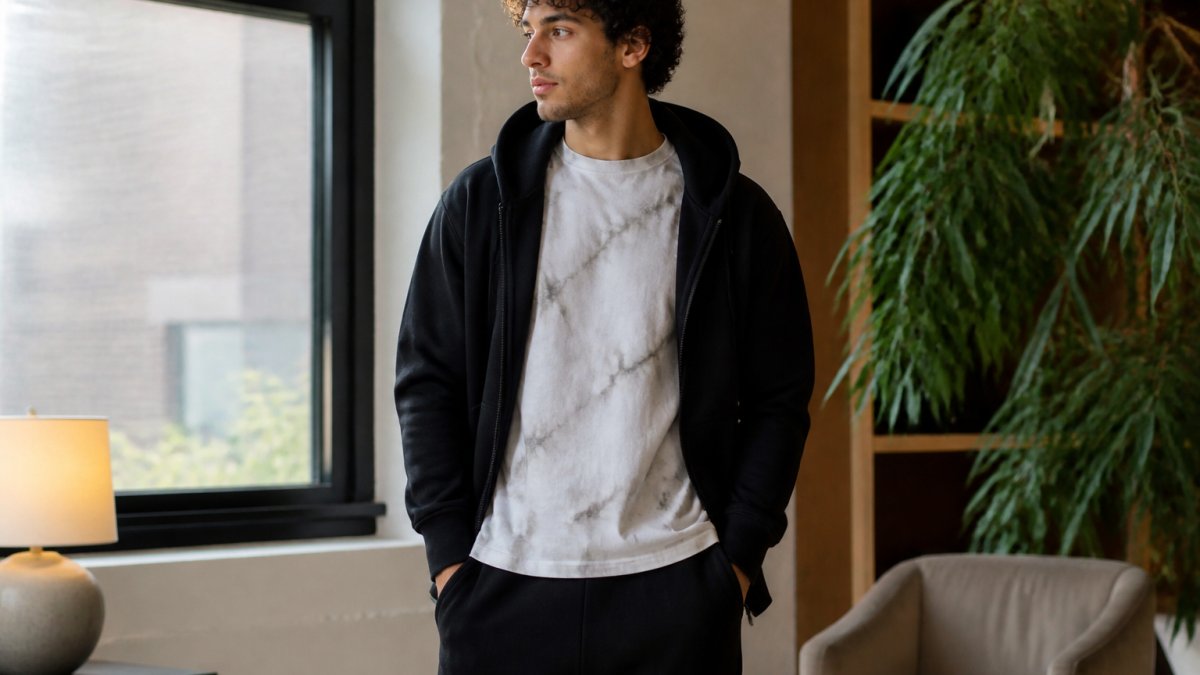
A quality hoodie is the foundation of everyday streetwear. It layers over everything, transitions between seasons, and handles constant washing better than lighter pieces.
Look for lined hoods, which reduce friction and pilling where the hood rubs against your shoulders.
The weight matters. Lightweight hoodies (under 8 oz/yd²) work for layering in mild weather but wear thin quickly. Heavyweight (10+ oz/yd²) feels durable from day one and improves with age.
T-Shirts and Graphic Basics
A graphic tee is where personality shows, and the durability of the graphic depends on the printing method. Screen-printed graphics (ink sits on top of the fabric) last longer than direct-to-garment printing (ink absorbed into fibers).
The base fabric matters more than the graphic. Heavyweight cotton (7.5+ oz/yd²) resists thinning through repeated wear and washing. Oversized fits distribute stress more evenly than fitted cuts, so oversized tees tend to last longer.
Graphic tees work best as layering pieces in everyday rotation rather than constant heavy wear. A printed tee worn twice weekly lasts significantly longer than one worn five times weekly.
Pants, Jeans, and Sweatpants
Sweatpants are the workhorse of everyday streetwear. The Hippy Mood Essential Fleece Sweatpants at $39.00 deliver exactly this: 65% cotton / 35% polyester fleece with a relaxed fit, ribbed cuffs, and reinforced pockets, designed to handle daily wear without falling apart.

Jeans last longest in raw denim (untreated, dark indigo) or sturdy twill. Stretch jeans feel more comfortable but wear out faster as elastane breaks down, so save them for occasional wear.
Hippy Mood Heavyweight Sweatpants — Baddie Street Edition →
The inseam is the stress point on all pants. Look for reinforced stitching where the inseam meets the crotch seam. This is where cheap pants split first. Quality pants use bar tacks or double stitching here.
How to Care for Streetwear to Maximize Durability
Buying durable streetwear is only half the equation. How you care for it determines whether it lasts two years or ten. Most people wash and dry incorrectly, cutting garment life in half without realizing it.
Washing and Drying Best Practices
Wash cold. Hot water opens fiber cuticles, making them prone to pilling and color fading; cold water closes them, protecting the fabric. This is the single most impactful change you can make.
Turn graphic tees and printed pieces inside out before washing to protect the graphic from agitation and friction. For fleece and brushed fabrics, inside-out washing reduces pilling.
Use a gentle cycle for hoodies and sweatpants, not heavy-duty. Heavy-cycle agitation breaks down fibers unnecessarily; gentle is the middle ground that cleans effectively without excess wear.
Skip the dryer when possible. Heat breaks down elastane, shrinks cotton, and damages graphics. Air dry flat or hanging.
Storage and Seasonal Maintenance
Fold rather than hang fleece and knit fabrics, since hanging stretches shoulder seams and distorts shape. Hanging works for structured pieces like jackets and coats.
Store in a cool, dry place away from direct sunlight, since UV light fades colors faster than anything except hot water. For seasonal storage, use breathable bags (not plastic) to prevent moisture buildup that leads to mildew.
Before storing, ensure everything is clean. Sweat and body oils oxidize over time, creating permanent stains. Washing before storage takes five minutes and prevents months of regret.
Evaluating Quality: A Durability Checklist
Before buying, run through this checklist. It takes 60 seconds and catches most durability red flags.
| Evaluation Point | What to Look For | Why It Matters |
|---|---|---|
| Seams | Double-stitched, reinforced at stress points | Single-stitched seams fail within months |
| Fabric weight | 7.5+ oz/yd² for tees, 9+ oz/yd² for fleece | Lightweight fabrics thin and pill quickly |
| Fiber blend | 60-70% natural / 30-40% synthetic | Pure synthetics lack breathability; pure natural shrinks |
| Hems | Flat-fell or double-folded | Single-fold hems unravel after a few washes |
| Pockets | Reinforced at corners, deep enough to use | Weak pockets tear from regular use |
| Cuffs and collars | Ribbed, not just folded fabric | Ribbing maintains shape through dozens of washes |
| Zippers | Smooth glide, firmly attached tab | Poor zippers jam and separate |
| Buttons | Securely stitched, not loose | Loose buttons fall off within weeks |
Cost Per Wear and Long-Term Value
A $60 hoodie worn 200 times over three years costs $0.30 per wear. A $20 hoodie worn 30 times before it falls apart costs $0.67 per wear. The expensive piece is actually cheaper.
This is why durable streetwear matters. You're not paying more upfront; you're spreading the cost across more wears.
Quality pieces from Hippy Mood Merch, like the Heavyweight Sweatpants at $60 or the Essential Fleece Sweatpants at $39, are designed for this math.

Calculate cost per wear for anything you're considering. If you'll wear it 100+ times over the next two years, it's worth paying for quality.
Building Your Durable Streetwear Wardrobe
Start with neutrals: black, grey, white, and navy. These pieces layer endlessly and never go out of style.
Add one or two statement pieces that reflect your personality. For Hippy Mood Merch customers, that might be the Tie-Dye Tee at $30 or the Cookies & Cream Oversized Hoodie at $69.99.
Buy fewer pieces but choose them carefully.
Resist trendy pieces that won't age well. Trends fade; quality doesn't. A well-made black hoodie looks current in 2026 and will still look current in 2030.
Building a durable streetwear wardrobe means choosing pieces that hold up through real life: washing, wearing, layering, and everything in between.
At Hippy Mood Merch, we've built our entire collection around this philosophy. We're trusted since 2018 because we deliver pieces that hit different and actually hold up. Textile care guidelines from the American Cleaning Institute confirm that proper care extends garment life by 50-100%, which means your investment in quality pieces pays dividends every time you wash them.
CHOOSE YOUR MOOD and build a wardrobe that works as hard as you do.
Frequently Asked Questions
What makes streetwear durable enough for everyday wear?
Durable streetwear relies on three core factors: heavyweight fabric construction (typically 7.5 oz/yd² or higher), quality fiber blends like cotton-polyester fleece or heavy cotton, and reinforced stitching at stress points like seams and pocket corners. Look for brushed fleece interiors that resist pilling and tight knit construction that maintains shape after multiple washes. Pieces like the Hippy Mood Essential Fleece Sweatpants use 65% cotton and 35% polyester in a tightly knit fleece that delivers both comfort and longevity.
How should you wash streetwear to make it last longer?
Wash streetwear inside out in cold water to protect graphics and prevent fading. Use a gentle cycle and avoid high heat in the dryer; air drying or low-heat settings preserve fabric integrity and prevent shrinkage. Wash dark colors separately and avoid bleach. For heavyweight pieces like sweatpants, wash every 2-3 wears rather than after each use to reduce wear on fibers. Store folded rather than hanging to prevent stretching at the shoulders.
Which fabrics are best for durable streetwear?
Heavyweight cotton (7.5 oz/yd² or higher) offers durability and breathability for t-shirts and basics. Brushed fleece with cotton-polyester blends (like 60% cotton, 40% polyester) provides warmth, shape retention, and resistance to pilling in hoodies and sweatpants. Sturdy twill and dark denim work well for pants and outerwear because they resist fading and maintain structure through repeated wear. The Tie-Dye Tee uses 100% US-grown heavyweight cotton, while the Cookies & Cream Oversized Hoodie combines 80% cotton with 20% recycled polyester for durability and sustainability.
What's the difference between cost per wear and upfront price?
Cost per wear divides the price by how many times you'll wear a piece before it wears out. A $60 hoodie worn 200 times costs $0.30 per wear; a $20 hoodie worn 50 times costs $0.40 per wear. Durable streetwear pieces justify higher upfront prices because they last longer, making them better value over time. Quality construction, heavyweight fabrics, and proper care extend the lifespan, turning a higher initial investment into lower long-term costs and less frequent replacement.